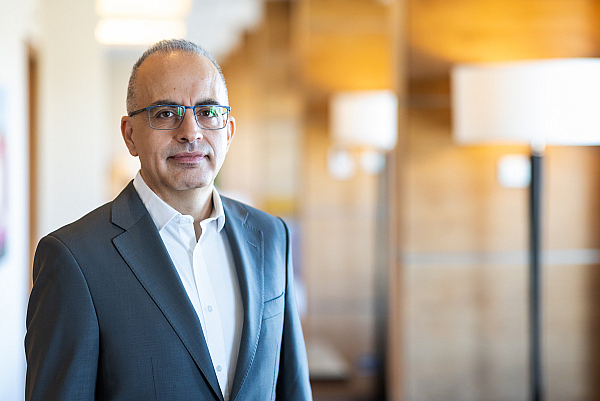

By Fadi El Abdallah, Chief Strategic Advisor, Reputation&Crisis Communications at APO Group (www.APO-opa.com).
This year’s anti-migrant protests in South Africa became a continental story. Some attacks were fatal. Ghana, Nigeria and Malawi brought citizens home, and Kenya, Lesotho and Zimbabwe warned their nationals there.
Diplomatic tension reaches companies quickly. In Ghana, an activist group petitioned their presidency for closer scrutiny of South African businesses.
False content travelled with the real events too. The fact-checker Africa Check identified AI-altered clips suggesting businesses were moving to Mozambique and Zimbabwe, and posts falsely claiming that protesters had pushed a supermarket chain to open 15,000 new jobs.
But few stories are simply true or false. This one mixed reports of real attacks with false claims. When you’re caught up in a story like that, the most damaging response I have seen is to call everything disinformation, because the denial can become a second story; often a bigger one.
Before issuing any statement, three questions show a company or organisation what it’s facing.
Three questions to ask first
1. Is it true?
The question of the truth is crucial, and thorough scrutiny is necessary to prevent personal interests from hiding it. The records should be set straight internally first: the established facts and original findings, the legal position, what was said or done at the time.
Where the answer is yes, the subsequent question is: what has been done since then to respond to the situation?
Communication can only show what has been done. It amplifies what is real, which is why I would never advise anyone to use it to hide a problem or to cover the lack of response or accountability.
The harder advice, and in my experience the most resisted, is to announce a problem before anyone else does, with the action already taken. A statement that sets out both leaves little for anyone else to reveal. There would be no “scandal”.
2. Is it coordinated, and where is it spreading?
During South Africa’s protests, a claim that migrant shop owners planned to poison food moved as a WhatsApp voice note through private groups that no monitoring software can read. A head office that disregards the spread across private networks anticipates only a fraction of what is happening.
The same risk comes from only reading English media. Judging the spread takes a network of connections and people on the ground (https://apo-opa.co/3X1coG6) who read the languages a story travels in, from Hausa and Swahili to Arabic, French and Portuguese.
Identical claims appearing at once on unconnected accounts point to a campaign, which needs a fast, specific answer. Monitoring the development of a false story, the speed and the media through which it is spreading is essential. If a false story is fading away, a public correction may be what revives and spreads it. In one case, APO Group (www.APO-opa.com) tracked inaccurate reporting about a multinational for a month, in English and Portuguese, and advised against a statement. The story never reached the company’s main markets. Whatever the response, the key messages (the facts and the actions) must be identical in every market, because they can travel across the continent. How they are delivered, and by whom, can differ.
3. Is it fair?
South African companies working elsewhere on the continent found themselves judged by their home country’s headlines.
One test helps. If a comparable organisation from another country would not face the same coverage for the same facts, part of the problem is stereotype. A 2024 study by Africa No Filter and Africa Practice found rigging mentioned in 10% of articles about Nigeria’s 2019 election and 2% about Malaysia’s, although Nigeria scored higher on an index of electoral democracy.
In my experience, stereotypes come more often from misunderstanding than from ill will. The answer is preparing the grounds through a patient explanation, long before anyone asks for it, to the people who judge from a distance: investors, lenders, head-office boards and international editors. The organisation is sometimes a weaker messenger. A regulator, an industry body, an academic study or an established journalist who already understands its work can often say what it cannot.
Before the story breaks
For 15 years I was the spokesperson and head of public affairs at the International Criminal Court. Because I had a legal background, the experience and the necessary preparation, I could often answer a false claim on a point of law the same day. In most organisations, the delay comes from debate about the wording between lawyers, communications teams and leadership.
The organisations that respond well have decided in advance who judges whether a story is true and who approves the response. They have agreed draft wording for the likeliest scenarios; built relationships with journalists, third parties and people in each market; and made their spokesperson known. A CEO the public sees for the first time in a crisis has little credibility to draw on.
The aim is to have the structure and reflexes in place before they’re needed, and most of my work with organisations now happens at this stage. A leadership team can test its readiness with two questions. If a damaging story about the organisation appeared tomorrow, who would decide if it was true and when; and how long would it take before the answer leaves the organisation?
Fadi El Abdallah, PhD, is Chief Strategic Advisor, Reputation&Crisis Communications at APO Group, which helps organisations in African markets prepare for, manage and recover from reputational crises.
Distributed by APO Group on behalf of APO Group Insights.
Media Contact:
marie@apo-opa.com
About APO Group:
Founded in 2007 by Nicolas Pompigne-Mognard, APO Group is the communications consultancy built for performance, combining strategic advisory, on-the-ground execution, and guaranteed visibility across all 54 African markets. Its owned newswire, Africa Newsroom, secures placement on 250+ Africa-focused news sites, connecting organisations directly with 450,000+ journalists, analysts, investors, and policymakers worldwide.
Recognised internationally for communications excellence, including SABRE, Davos Communications, and World Business Outlook distinctions, APO Group partners with global and African organisations for whom the continent is a strategic priority. Clients include the African Development Bank Group, Africa CDC, Afreximbank, NFL, Nestlé, Emirates, Canon, Western Union and GITEX Global.